
 See Our Latest Article on HelloNation

Neck pain can develop from ordinary activities such as prolonged computer use, awkward sleep positions, lifting, driving, or repetitive household work. Most cases involve irritated muscles, joints, or connective tissues and improve over days or weeks, but pain accompanied by weakness, numbness, fever, major injury, or trouble breathing requires prompt medical attention. ([medlineplus.gov](https://medlineplus.gov/ency/article/003025.htm?utm_source=openai))
What commonly causes neck pain?
The neck supports the head while allowing a wide range of movement. Because its muscles and joints work continuously, relatively small stresses can lead to stiffness or soreness.
Prolonged positions
Holding the head in one position for a long time is a frequent cause of neck discomfort. Examples include:
- Looking down at a phone or book
- Working at a computer with the screen too high, too low, or off to one side
- Watching television from a twisted position
- Driving for long periods without changing posture
- Performing paperwork, sewing, crafting, or other close-up tasks
The issue is not a single “bad” posture so much as remaining in one position without movement. Muscles can become fatigued when they must hold the head steady for extended periods. ([medlineplus.gov](https://medlineplus.gov/ency/article/003025.htm?utm_source=openai))
Sleep-related strain
A neck may feel painful in the morning after sleeping with the head turned, using a pillow that is too high or too flat, or sleeping on the stomach. A pillow should support the head so the neck stays reasonably aligned with the rest of the spine.
Morning stiffness does not necessarily mean the neck was damaged during sleep. It may reflect several hours of muscle tension in one position.
Muscle strain from lifting or physical work
Carrying bags, moving furniture, clearing branches, shoveling snow, or lifting a child can strain the neck and upper shoulder muscles, especially when the load is held away from the body or lifted while twisting.
Physical activity is generally helpful, but sudden increases in workload can overwhelm tissues that are not accustomed to the demand. This is particularly relevant during seasonal outdoor chores in the Hudson Valley, when people may go from limited winter activity to intensive yardwork in a single weekend.
Injuries, including whiplash
Falls, sports injuries, and vehicle collisions can stretch the muscles and ligaments supporting the neck. Whiplash may cause pain, stiffness, headaches, dizziness, or discomfort that spreads into the shoulders and upper back.
Pain after a significant impact should not be dismissed simply because symptoms seem mild at first. Some injuries become more noticeable over the following hours.
Irritated nerves and age-related changes
A disc, joint, or swollen tissue can irritate a nerve in the neck. This may produce pain that travels into the shoulder, arm, or hand, along with tingling, numbness, or weakness.
Normal age-related changes, including disc wear and arthritis, can also reduce neck mobility. Imaging findings do not always explain pain, however. Disc bulges and arthritic changes may occur in people who have no symptoms, so examination and the overall symptom pattern matter. ([ncbi.nlm.nih.gov](https://www.ncbi.nlm.nih.gov/books/NBK338120/?utm_source=openai))
How can daily habits help prevent neck pain?
Prevention is mostly about reducing prolonged strain, building general strength, and responding early to stiffness.
Adjust the work area
A practical workstation allows the head to remain balanced rather than repeatedly tilted forward.
- Keep the top portion of a computer monitor near eye level.
- Place the screen directly in front of the body.
- Keep elbows supported when possible.
- Use a chair that allows both feet to rest comfortably.
- Avoid cradling a phone between the ear and shoulder.
- Change position regularly instead of trying to hold a rigid “perfect” posture.
For home offices, small changes can help. Raising a laptop with a stable support and using a separate keyboard may reduce prolonged downward viewing. The goal is comfort and movement, not complete stillness.
Take movement breaks
Brief, frequent movement is usually more useful than one long stretching session at the end of the day. Every 30 to 60 minutes, stand up, walk briefly, relax the shoulders, and gently turn the head within a comfortable range.
Simple movements may include:
- Slowly turning the head from side to side
- Looking up and down without forcing the motion
- Drawing the shoulder blades gently back
- Rolling the shoulders in a controlled manner
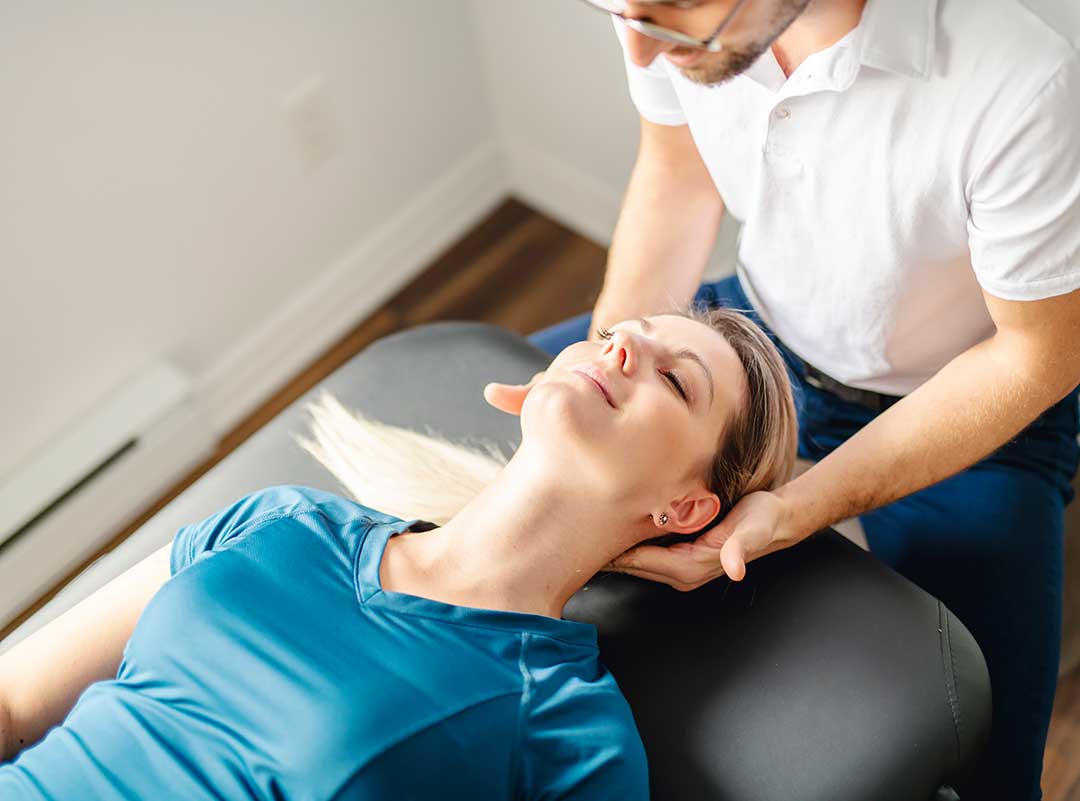
Pain should not be pushed sharply or aggressively. If a movement increases arm symptoms, dizziness, or significant pain, stop it.
Use safer lifting mechanics
Before lifting, move close to the object, bend through the hips and knees, and avoid twisting while carrying. Divide heavy loads into smaller portions when possible. During snow removal or outdoor chores, alternating tasks and taking breaks can reduce the buildup of muscle fatigue.
Cold weather itself does not automatically cause a neck injury, but winter conditions can encourage guarded posture, prolonged driving, and sudden strenuous activity. Warming up with several minutes of easy movement before demanding work may be useful.
Support healthy sleep positioning
Side or back sleeping usually places less rotational stress on the neck than stomach sleeping. A pillow should fill the space between the head and mattress without pushing the head sharply upward or allowing it to drop downward.
There is no single pillow type that works for everyone. Comfort, neutral positioning, and the ability to move freely are more relevant than a particular material or design.
What should someone do when neck pain begins?
For mild pain without warning signs, continuing gentle daily movement is often preferable to immobilizing the neck. Heat or cold may provide short-term comfort, and over-the-counter medication may be appropriate for some people, depending on medical history, allergies, other medications, and individual advice from a qualified clinician. ([nhs.uk](https://www.nhs.uk/symptoms/neck-pain-and-stiff-neck/?utm_source=openai))
Avoid activities such as driving or cycling if the neck cannot turn safely. A soft collar should not be used routinely unless specifically advised, because prolonged restriction may contribute to stiffness.
If symptoms are not improving after several weeks, keep returning, or interfere with work, sleep, walking, or normal arm use, a health evaluation can help identify the likely source and appropriate next steps.
Which symptoms require urgent attention?
Neck pain needs prompt medical assessment after a serious fall, collision, or blow. Seek urgent care for symptoms such as:
- New or worsening weakness in an arm or leg
- Numbness or tingling that persists or spreads
- Trouble walking, balance changes, or clumsy hands
- Loss of bladder or bowel control
- Fever, severe headache, or marked neck stiffness
- Difficulty swallowing or breathing
- Chest pain, fainting, or sudden neurological symptoms
These signs can indicate problems beyond ordinary muscle strain. MedlinePlus also advises urgent evaluation when neck pain occurs with breathing or swallowing difficulty. ([medlineplus.gov](https://medlineplus.gov/ency/article/003025.htm?utm_source=openai))
Neck pain prevention does not require holding the body rigid or avoiding normal activity. More sustainable habits include changing position often, preparing for seasonal physical work, setting up screens sensibly, sleeping with the head supported, and taking new or persistent symptoms seriously.
